Product
In developmentKalendaryo
Booking and scheduling for appointment businesses, with an AI agent that handles the back-and-forth of getting someone into the calendar — so the phone stops interrupting the work.
The problem
The phone rings while your hands are busy.
In a barbershop, a nail salon, or a two-chair studio, the person who answers the phone is usually the person mid-service. So calls go unanswered, voicemails go unreturned, and the booking goes to whoever picked up.
The usual fix is a booking page — which helps, until a customer wants something the form doesn't cover. Kalendaryo's answer is an agent that can hold the conversation a receptionist would have, and that is wired directly into the same calendar the shop actually runs on.
What it does
A receptionist that doesn't take lunch.
- Takes the booking
- A customer describes what they want in plain language — “a fade with Mario, Saturday morning if he has it.” The agent checks real availability against real staff schedules and books it.
- Reschedules and cancels
- The same conversation handles changes. Freed slots go back into availability immediately, so the calendar never drifts from reality.
- Works without an account
- First-time customers can book as guests. Nobody is forced to create a login before they are allowed to give you money.
- Confirms before it acts
- Every booking, change, or cancellation is read back and confirmed before it is written. This is enforced in the application, not left to the model.
What it looks like
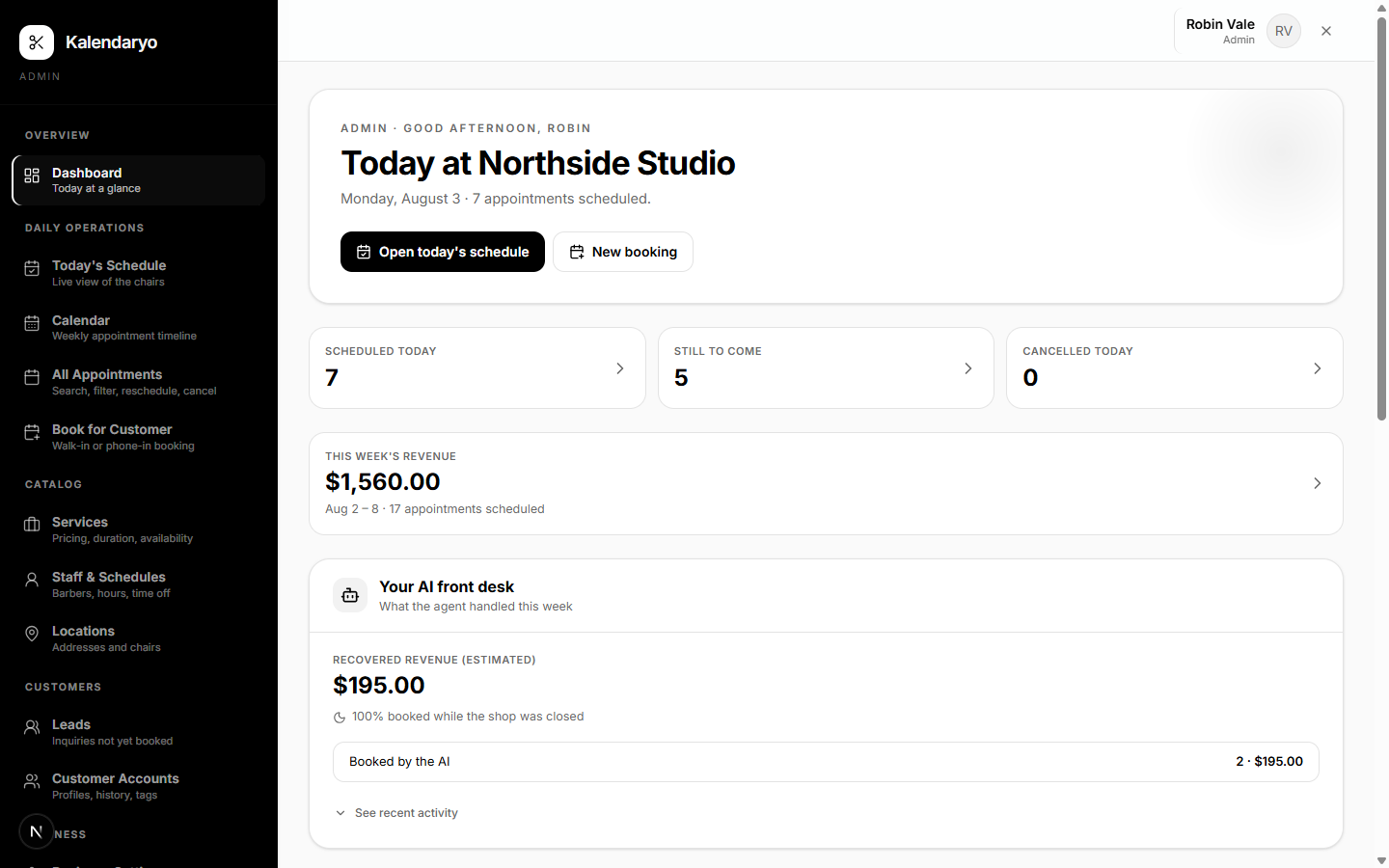
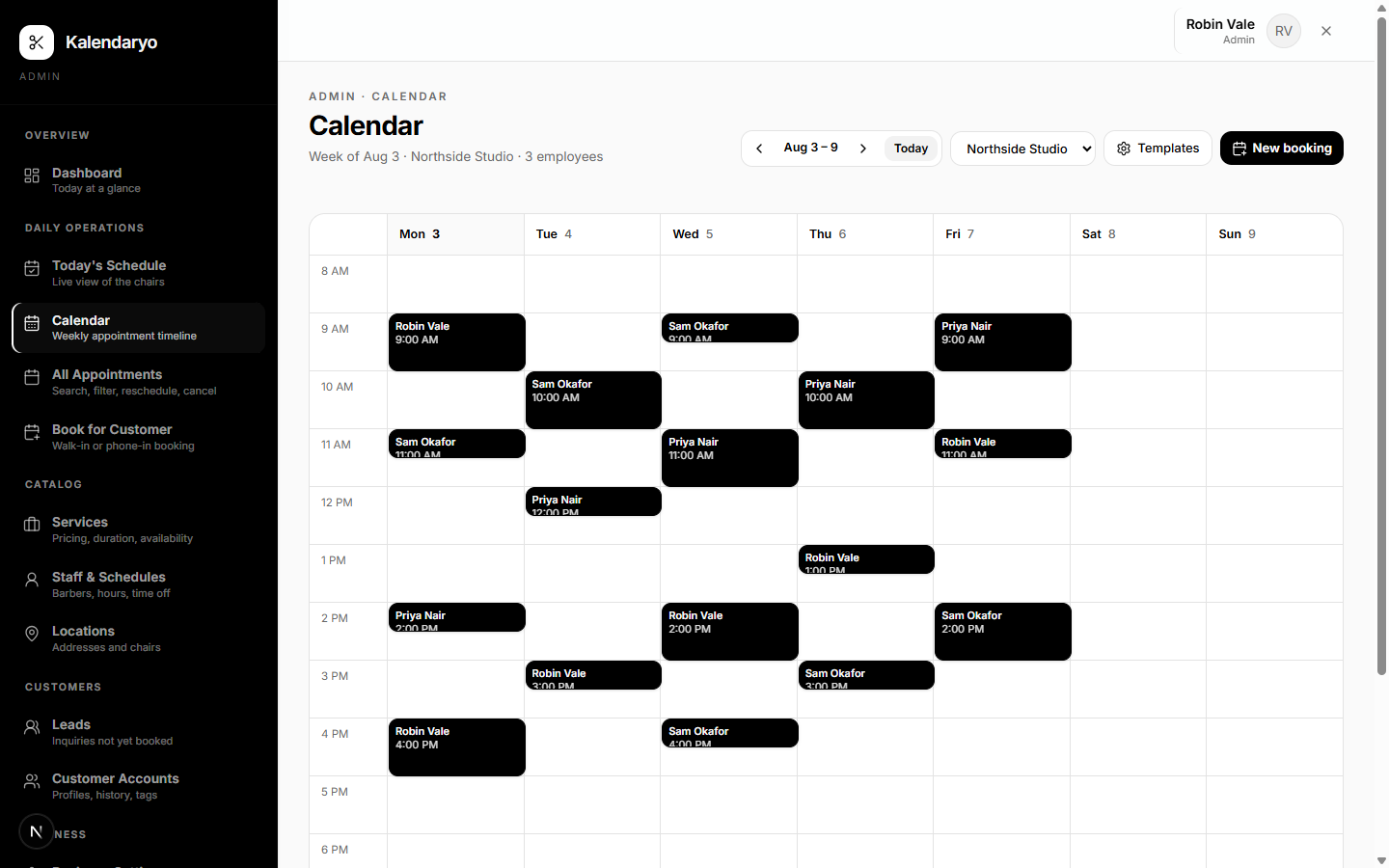
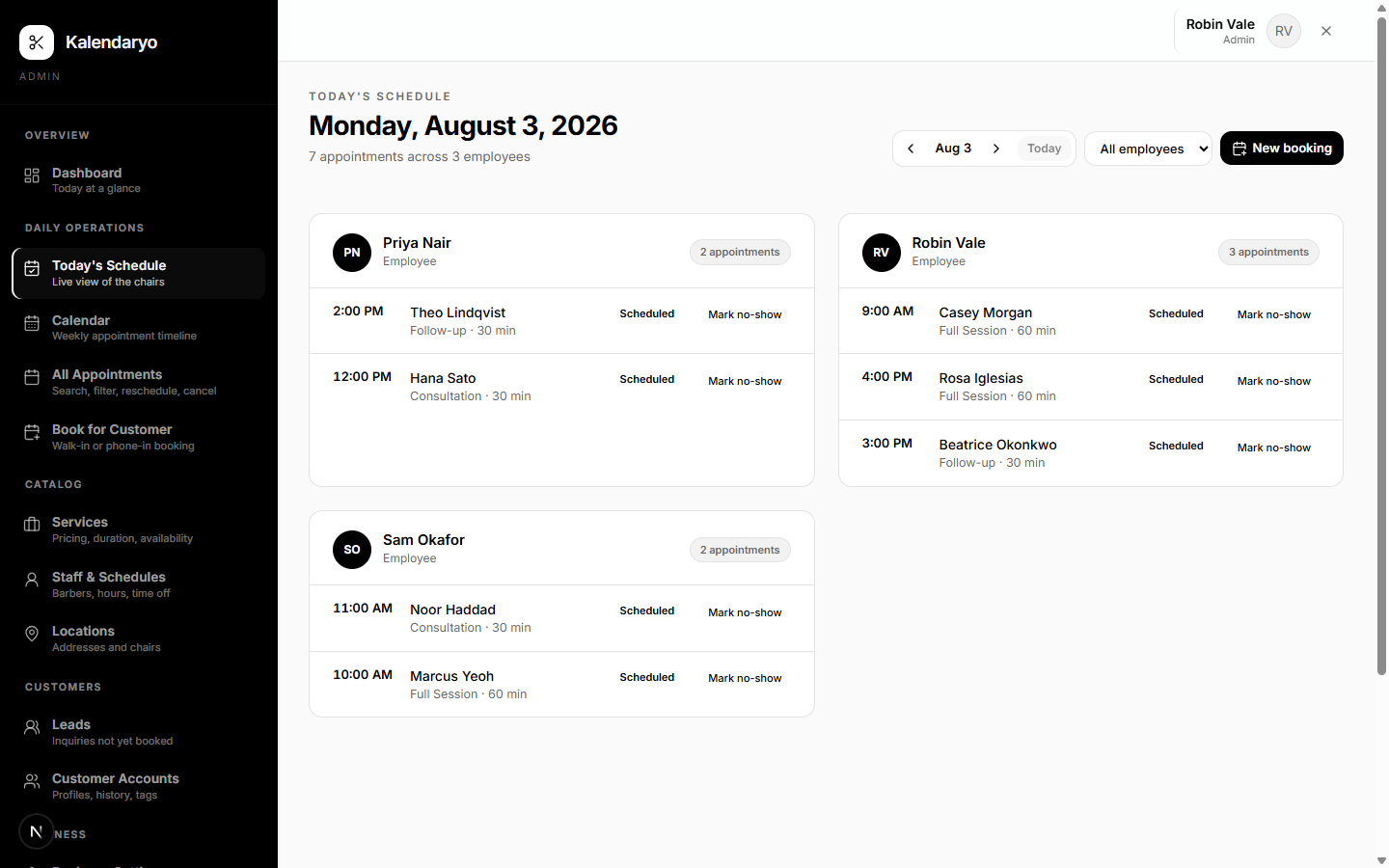
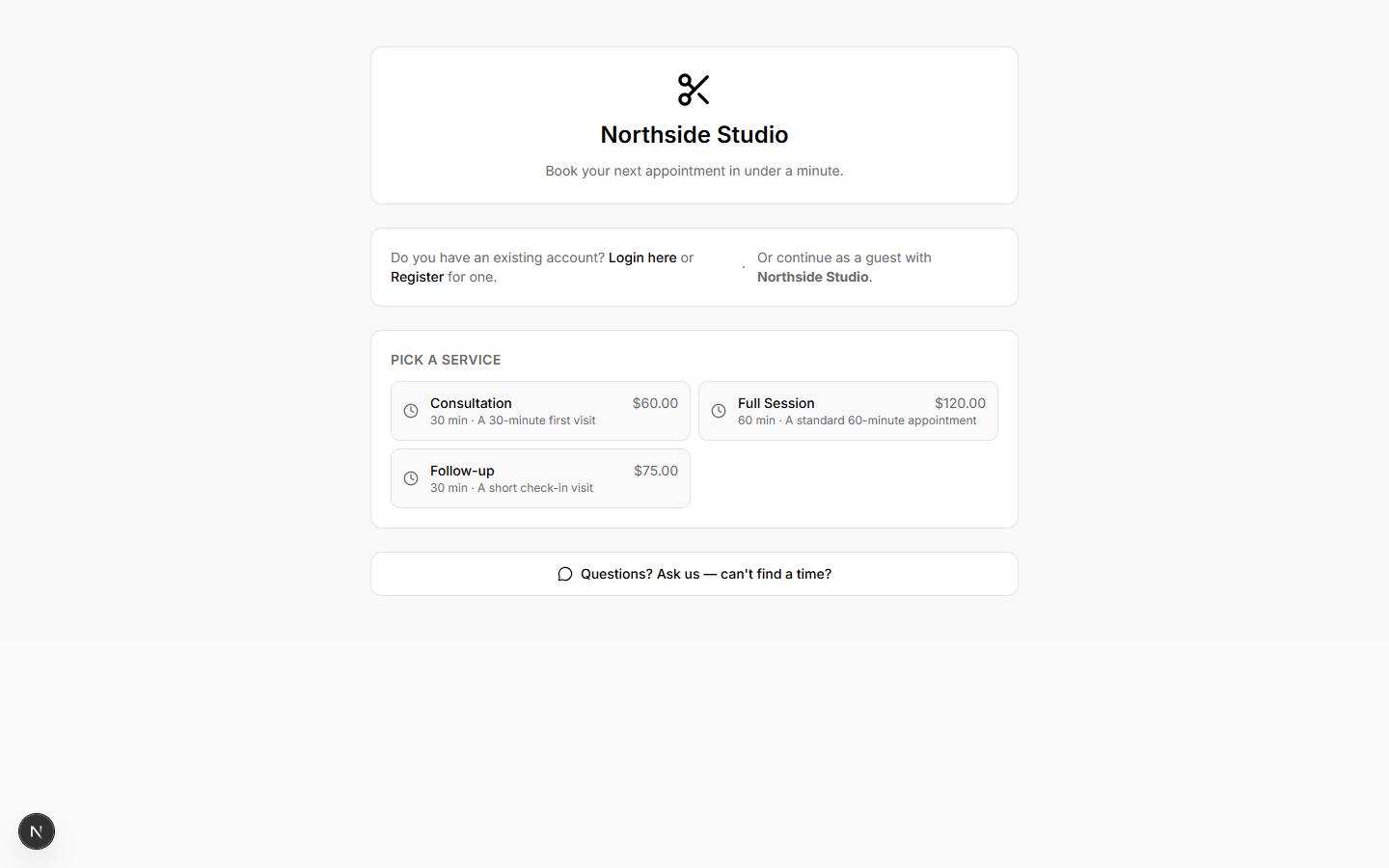
The shop's day, in one place.
Screens from the working software. The business shown is a demonstration account — the names, bookings, and figures in it are invented.
What's next
In developmentNot every business books by the hour.
A martial arts school, a tutor, a cleaning company, a contractor — the front door is a contact form or a phone number that ends at a person who is busy doing the actual work. The enquiry sits unread for a day, and the customer goes to whoever answered first. The message was never lost; it was beaten by silence.
We're extending Kalendaryo so the same agent picks up those enquiries, whatever channel they arrive on, and answers within a minute. There are three ways in, and none of them require rebuilding a website:
- Keep your existing form
- Point your contact form's notification email at a Kalendaryo intake address. We read the submission, reply with real answers and a link to book, and the enquiry becomes a tracked record. Nothing about the form itself changes.
- Embed a chat widget
- A single line of script on any site puts the agent on the page, where it can answer questions about pricing, schedule, and availability, and book on the spot.
- Use a hosted enquiry page
- For businesses that would rather link out than embed, a form we host — with a proper, unchecked consent box for anyone who wants to be texted back.
Every enquiry lands in a pipeline instead of an inbox, and open ones are followed up on a capped schedule until they book, reply, or ask to stop.
Reminders & notifications
Text messages, sent only to people who asked for them.
No-shows are the most expensive problem an appointment business has. Kalendaryo sends appointment confirmations and reminders by SMS on behalf of the business a customer booked with.
Text messaging is off until someone turns it on. An account holder enables it themselves, and we store when and how — a dated record, not a policy page. Someone who books as a guest is emailed, never texted: we won't message a number typed into a public form by someone we can't verify. A number given to one business is never used to message on behalf of another. Replying STOP ends every message type at once; START restores them and HELP returns contact information.
The same rule governs the enquiry channels above, and it is enforced in code rather than left to policy. Someone who calls or texts a business first can be answered on the channel they used. A mobile number that merely appeared in a web form is not consent to text it — those enquiries get an email reply unless the form carried an explicit, unchecked opt-in.
These are transactional messages tied to a booking or an enquiry the recipient started. We do not sell, rent, or share mobile numbers or opt-in data with third parties, and we do not use them for marketing.
The full terms are on the Messaging Terms page, and how we handle the data is covered in the Privacy Policy.
Status
In development, with early users.
Kalendaryo is running with a small number of shops while we get it right. If you run an appointment business and want to be one of them, tell us about your shop.